
When Algorithms Breathe: Grids, Emergence, and the Poetics of the Digital
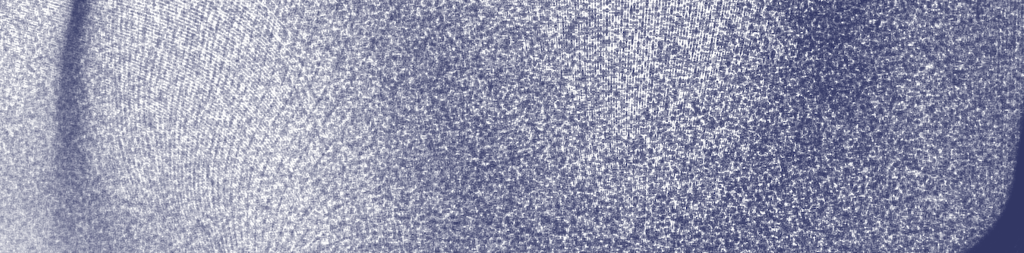
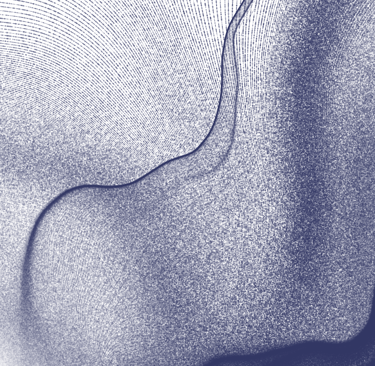
How can a finite, deterministic algorithm generate the improbable? My work explores this paradox by transforming grids, rules, and trajectories into sensitive systems where structure falters and emergence occurs. In these breathing geometries, the algorithm becomes a site of perceptual events rather than pure procedure.
hOrtAn
The Fault Line Inside Computation
Digital art is usually framed as the realm of precision, repeatability, and control.
Yet behind every algorithm lies a deeper tension: a sequence of finite, explicit, unambiguous operations can nonetheless give rise to something unforeseen.
The improbable is not outside the algorithm — it emerges from its excess.
My practice begins exactly here, at the point where structure begins to drift, where rules hesitate, where geometry reveals intensities that were never explicitly programmed.
Architecture as a Logic of Vibrations
My background in architecture shapes the foundation of this work.
Architecture teaches that space is not neutral; it modulates experience, organizes flows, and vibrates with forces.
In generative art, the “space” is a field of parameters and rules — but it too can vibrate, destabilize, or exceed itself.
The grid, emblem of modernist rationality, becomes a membrane capable of breathing, bending, drifting, or revealing fleeting apparitions.
The grid is not a container; it is an organism.
The Algorithm as a Sensitive System
An algorithm is traditionally defined as a finite, deterministic, non-ambiguous procedure designed to solve a problem.
But what interests me is the moment where this clarity produces opacity, where this determinism opens onto indeterminacy.
Noise functions accumulate memory; trajectories introduce frictions; iterative distortions allow the system to forget its origin.
From this friction emerges something the algorithm was not directly coded to produce.
Determinacy giving rise to the improbable — this is the paradox at the heart of my practice.
These forms are not glitches; they are events.
Deleuze and the Virtual Event of Computation
This dynamic resonates with Deleuze’s distinction between the actual and the virtual.
The algorithm is actual in its code, yet virtual in its reservoir of possible transformations.
A generative system is a diagram: a field of forces waiting to be actualized.
When a sphere, halo, or ghost form appears in my work — even though none has been explicitly coded — this emergence is more than an effect.
It is an event in the Deleuzian sense: the manifestation of a virtual configuration activated through interference, resonance, or structural fatigue.
These forms are not drawn.
They happen.
Emergence: When the Grid Stops Being a Grid
Much of my work revolves around thresholds — the moment where a structure ceases to behave like itself.
A line becomes a vibration.
A grid becomes a membrane.
Geometry becomes atmosphere.
Spheres emerge where intensities accumulate; halos appear where trajectories fold; ghost forms arise where rules collide.
These apparitions mark the point where computation becomes perceptual.
Emergence is the algorithm remembering that it can be more than itself.
The NFT Ecosystem as Laboratory
Platforms such as fxhash and Objkt act not merely as marketplaces but as experimental ecologies.
Each mint is an actualization of a virtual field, a crystallization of one possibility among thousands.
Collectors engage not only with artworks but with processes, with the unfolding life of a system.
This ecology reinforces my interest in designing algorithms that are not perfect but alive —
systems that breathe, hesitate, fluctuate, and reveal their own fragility.
The Poetics of the Improbable
What I pursue across grids, drifts, spheres, and ghost intensities is not control, but emergence —
a space where deterministic structure produces improbable sensitivity;
where computation gives rise to apparition;
where the algorithm becomes event.
In the breathing of algorithms, a new poetics of the digital takes shape.